A Deep Dive Into the Most Iconic Jamaican Food

Jamaican food has a way of announcing itself before it reaches the table. You smell pimento smoke from a roadside jerk pan long before you see the cook turning chicken over split logs. You catch the warm, sweet scent of fried plantain drifting out of a kitchen window. You hear the crackle of oil, the scrape of a spoon against a pot of rice and peas, the lid lifting off a simmering stew. It is one of the world’s most recognizable cuisines, not because it tries to impress, but because it is rooted, assured, and full of character.
What makes Jamaican food so memorable is not only heat, although Scotch bonnet peppers certainly play their part. It is the layering of influences and techniques that have matured over centuries. Indigenous Taíno cooking traditions, African foodways, British colonial habits, Indian indentured labor influences, Chinese migration, and local agricultural realities all show up on the plate. That is why a single meal can carry smoke, spice, starch, brine, sweetness, and deep savory notes without feeling cluttered.
People who are new to the cuisine often reduce it to jerk chicken, patties, and maybe rum cake. Those are important, but they are only the most visible points on a much larger map. The iconic dishes of Jamaica are tied to breakfast tables, Sunday gatherings, roadside vendors, holiday menus, market stalls, fishing villages, and city lunch counters. To understand them properly, you have to think beyond restaurant shorthand and look at how Jamaicans actually eat.
The flavor logic behind the cuisine
The foundation of Jamaican cooking is balance. Even bold dishes usually hinge on contrast. Saltfish meets the creamy, almost buttery texture of ackee. Curry goat arrives hot and fragrant beside mild white rice or a starchy boiled provision. Jerk seasoning delivers fire, but also sweetness from allspice, depth from thyme, and freshness from scallion. Fried dumplings provide neutral comfort against spicy or highly seasoned mains.
Seasoning in Jamaica is also practical. Green onions, thyme, garlic, ginger, pimento, onion, and Scotch bonnet do not simply add flavor. They preserve, penetrate, and transform. A good marinade sits in the meat, not on top of it. A proper fish tea tastes light at first sip, then opens up with pepper, herbs, and the sweetness of pumpkin or root vegetables. This is food built by people who knew how to coax richness out of limited ingredients and how to make modest cuts or pantry staples feel generous.
Texture matters as much as spice. One reason the cuisine travels so well is that it rarely depends on a single note. A plate of oxtail with rice and peas may include tender meat, glossy gravy, soft beans, and a side of crisp slaw or steamed cabbage. Even something as simple as bammy, a cassava flatbread with ancient roots, gives chew and body to fried fish.
Ackee and saltfish, the national dish with a larger story
No discussion of iconic Jamaican food can start anywhere else. Ackee and saltfish is the national dish, and for good reason. It captures the island’s history and palate in one pan. Saltfish came through the colonial trade system as a shelf-stable imported protein. Ackee, originally from West Africa, found a home in Jamaica and became part of the island’s identity. Together, they form something that feels native in the deepest cultural sense, even if their historical routes were complex.
Cooked properly, ackee is delicate. Its texture is often compared to scrambled eggs, but that only tells part of the story. Good ackee is softer and creamier, with a subtle nuttiness and a clean finish. It should hold its shape enough not to collapse into mush. The saltfish brings backbone, especially after soaking and simmering to remove excess salt. Onion, tomato, https://ameblo.jp/spencertpos656/entry-12983806551.html scallion, thyme, black pepper, and Scotch bonnet usually round out the pan, creating a dish that tastes bright and savory at once.
What matters with ackee and saltfish is restraint. Overwork the ackee and it disintegrates. Overseason the pan and you bury the very quality that makes the dish special, which is its understated richness. The best versions I have tasted were not the loudest. They were the ones where each bite gave a little salt, a little sweetness from tomato, a little herbal lift, and that unmistakable soft texture from the fruit itself.
It is often eaten for breakfast, especially with fried dumplings, boiled green banana, yam, or breadfruit. That pairing tells you something important about Jamaican eating habits. Hearty breakfasts are not unusual. A plate designed to carry someone through a morning’s work naturally leans toward starch, salt, and protein.
Jerk, the method everyone knows but few fully understand
Jerk is probably the most internationally famous expression of Jamaican food, yet it is also one of the most misunderstood. Outside Jamaica, the word often gets flattened into a bottled flavor, usually something sweet, smoky, and hot. On the island, jerk is both seasoning and technique. It is inseparable from fire, smoke, patience, and place.
Traditional jerk has roots associated with Maroon communities, who developed methods for seasoning and slow-cooking meat in ways that were practical and deeply flavorful. Pimento wood is central to the real thing. It lends an aroma that is difficult to fake. The seasoning itself typically includes allspice, Scotch bonnet, thyme, scallion, garlic, ginger, and other spices, but proportions vary by cook, family, and parish.
Jerk chicken gets most of the attention, and a good one should have several distinct qualities. The exterior should be dark and fragrant, with char in places but not bitterness. The meat should remain juicy, especially around the bone. Heat should arrive clearly, but it should not flatten the palate. If all you taste is pepper, the balance is off.
Jerk pork is, in many ways, the richer experience. Pork accepts seasoning differently and benefits from its own fat. When cooked slowly over pimento wood, it develops an almost sticky intensity, with crisp edges and deep savory pockets inside. In roadside settings, it often comes chopped into pieces, served on foil or paper with festival, bread, or bammy. That casual presentation can fool people. This is highly skilled cooking disguised as everyday food.
One thing worth saying plainly is that jerk should not taste generic. Real jerk varies. Some cooks push the allspice. Others lean into fresh herbs or stronger smoke. Some serve sauces on the side, some do not. That variation is part of the tradition, not a flaw in it.
Rice and peas, the quiet anchor of the plate
Rice and peas is less flashy than jerk, but it may be even more essential. In Jamaica, the “peas” are often kidney beans or gungo peas, depending on the dish and season. The rice is usually cooked with coconut milk, thyme, scallion, garlic, and sometimes a whole Scotch bonnet. That whole pepper is a classic move. It perfumes the pot without necessarily turning the rice fiery.
The result should be fluffy, fragrant, and gently rich. It should support the main dish without fading into the background. When rice and peas is done badly, it is heavy, wet, or bland. When it is done well, it carries enough flavor to be memorable on its own.
Sunday dinner in many Jamaican households revolves around this kind of supporting excellence. Oxtail, chicken, curry goat, or stew peas may take top billing, but rice and peas is what holds the meal together. It catches gravy, softens spice, and provides a familiar center.
Curry goat and the mark of patience
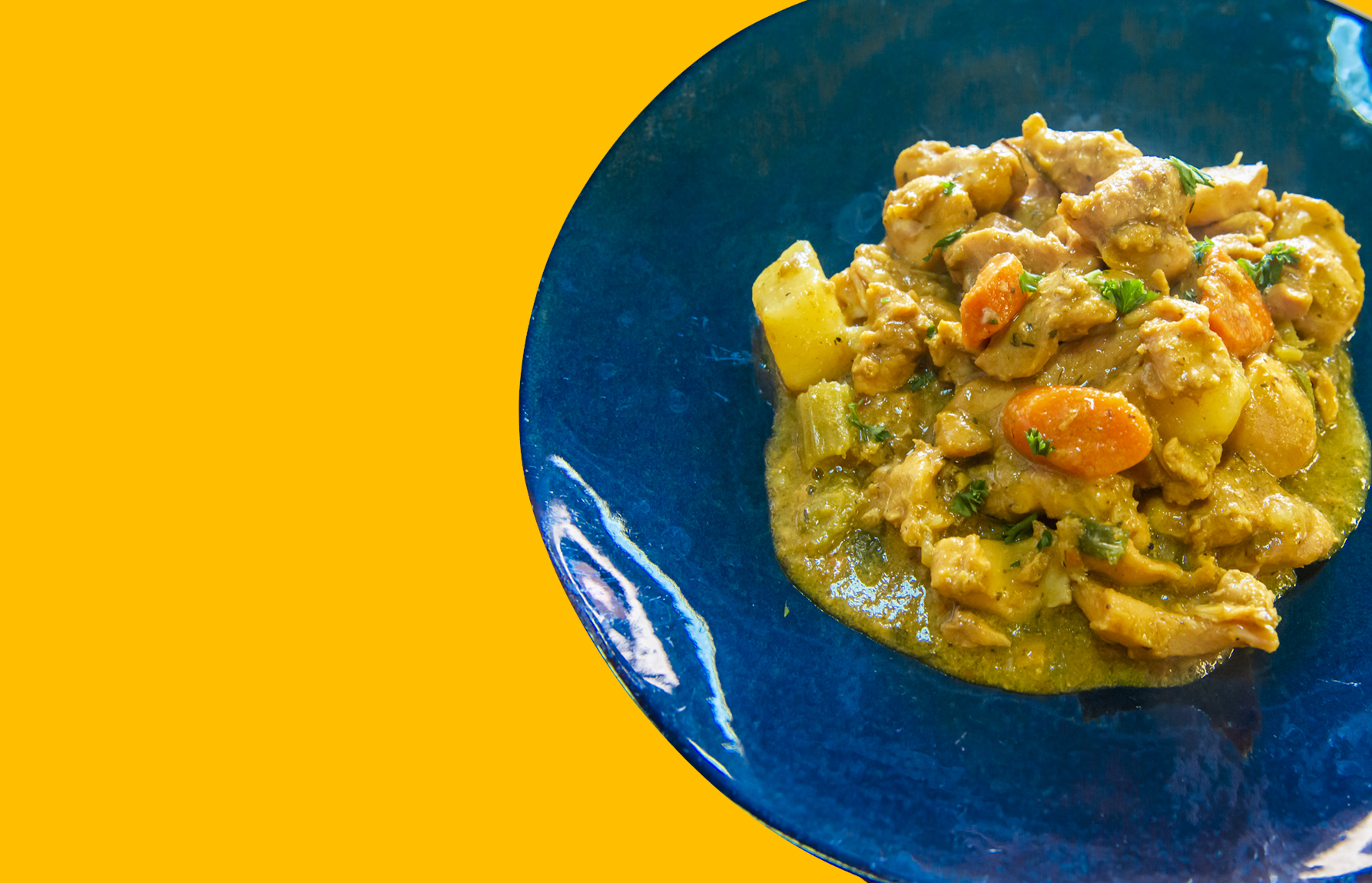
Curry goat is one of the clearest examples of Jamaica’s ability to absorb outside influences and make them local. Curry arrived through Indian indentured laborers in the nineteenth century, but Jamaican curry is its own thing. It often has a different spice profile from many South Asian blends, with a distinct earthiness and a rounded warmth rather than a sharp burst of individual spices.
Good curry goat demands time. Goat can be tough if rushed, and this is one dish where shortcuts show immediately. The meat should be marinated, browned properly, then simmered until it loosens and yields without falling apart completely. The sauce should cling rather than pool. Potatoes are common, not only because they stretch the dish, but because they absorb the curry beautifully.
At celebrations, curry goat is a marker of seriousness. Weddings, parties, funerals, and major family gatherings often feature it because it feels both festive and substantial. It is also one of those dishes that sparks strong opinion. Some people want a thicker gravy. Some want more heat. Some insist the goat must keep a slight chew rather than going soft. Those debates are part of the food’s life.
Oxtail, once humble, now prized
Oxtail has undergone the kind of transformation that happens to many “lesser” cuts once enough skilled cooks prove what they can do with them. What was once considered a practical, economical choice has become expensive in many places. That makes its Jamaican treatment all the more worth understanding.
Jamaican oxtail is usually seasoned assertively, browned, then braised until the connective tissue melts into the gravy. Broad beans often appear near the end. The finished dish should have depth without greasiness, and the sauce should be glossy with natural body. The meat should come away from the bone with little resistance, though not collapse into shreds.
This is not quick comfort food. It is deliberate cooking. The reward is a plate that feels luxurious without becoming refined in the fussy sense. Rice and peas alongside oxtail is one of the most satisfying combinations in the cuisine, partly because the beans and coconut in the rice play so well with the richness of the braise.
Escovitch fish and the art of brightness
For all the attention paid to meat, fish is central to Jamaican food culture. Escovitch fish stands out because it showcases a very different flavor structure from heavy braises or smoky jerk. A whole fish, often snapper, is seasoned, fried until the skin crisps, then topped with a sharp, colorful dressing of vinegar, onions, carrots, and Scotch bonnet peppers.
The point of escovitch is tension. You want the fish hot and crisp, the topping lively and acidic. Let it sit too long and the crust softens. Eat it too quickly and the dressing may not settle into the fish enough. The sweet spot is when the texture still holds but the vinegar and pepper have started to work their way in.
Served with bammy or festival, escovitch captures a coastal side of Jamaica that visitors sometimes miss if they spend all their time chasing jerk. It is especially satisfying in warm weather because it feels vivid rather than heavy.
Bammy, festival, and the starches that complete the meal
One of the easiest mistakes people make with Jamaican food is treating starches as filler. In reality, they are part of the dish’s logic. Bammy, made from cassava, carries one of the oldest culinary lineages in Jamaica. Its roots go back to Indigenous Taíno food traditions. Traditionally flattened and cooked, then often soaked lightly and fried, it offers chew, mild sweetness, and a clean flavor that suits fish beautifully.
Festival is a different pleasure altogether. Slightly sweet, golden, and elongated, it sits somewhere between fried dumpling and fritter. Next to jerk meat or fried fish, it provides contrast. The sweetness is not dessert-like. It is just enough to offset smoke, salt, and heat.
Then there are boiled provisions, a term that covers staples such as green banana, yam, dumplings, and breadfruit. These foods are deeply woven into everyday eating. They are practical, sustaining, and excellent at carrying sauces or pairing with saltfish and mackerel. People unfamiliar with the cuisine sometimes overlook them because they seem plain. On the table, they are anything but incidental.
Patties, the portable icon
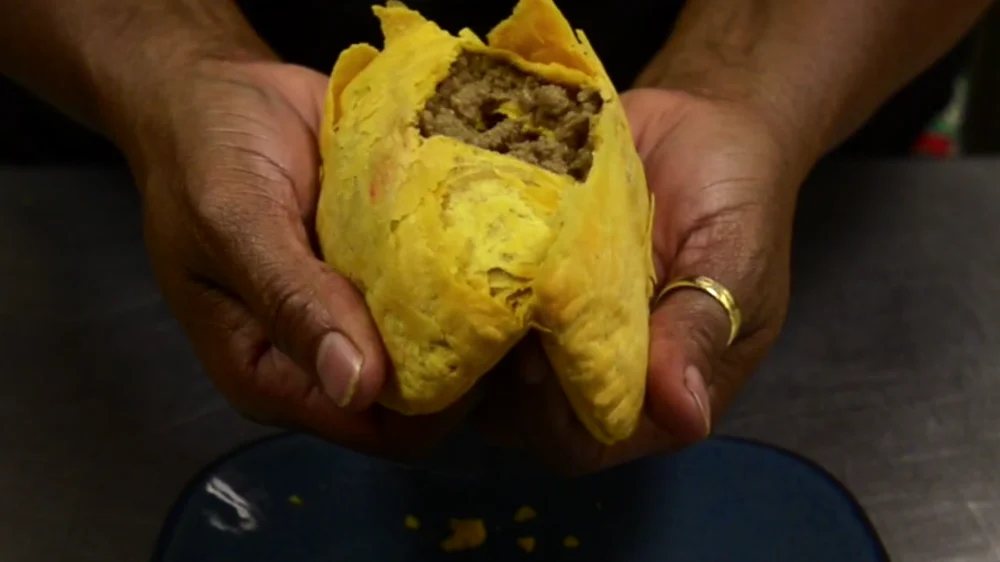
Few foods represent the everyday reach of Jamaican cooking like the patty. Found in bakeries, school canteens, roadside shops, and city lunch spots, the patty is portable, affordable, and deeply familiar. The pastry is usually tinted yellow with turmeric or curry powder and should be flaky without turning brittle. The filling, often beef, is seasoned with the kind of directness that makes one hand-held pie feel like a real meal.
Beef remains the benchmark, but chicken, vegetable, shrimp, and even ackee fillings are common in some places. The ideal patty has a clean seal, enough filling to matter, and pastry that holds together without turning doughy. In Jamaica and across the diaspora, the patty is not merely a snack. It is a food memory, a lunch solution, and a cultural marker.
There is also the famous patty-and-cocoa-bread pairing, which says a lot about Jamaican instincts around texture and practicality. The soft bread catches escaping filling and tempers the pastry’s richness. It is a small piece of food engineering that works because it answers an actual eating need.
Stew peas, soup, and the deeper home-cooking tradition
Not every iconic Jamaican dish announces itself through smoke or spice. Some of the most meaningful foods are gentler at first bite, then increasingly satisfying. Stew peas is a prime example. Typically built with red peas, salted meat or pig’s tail, herbs, coconut milk, and spinners, small hand-rolled dumplings, it is thick, hearty, and deeply comforting.
A bowl of stew peas tells you a lot about Jamaican home cooking. It values thrift, but never at the expense of flavor. It respects ingredients that need time. It also understands that comfort can come from body and warmth as much as from bold seasoning. This is the kind of dish people crave when they are homesick.
Soups hold a similarly important place. Jamaican soups are often substantial enough to function as full meals. Mannish water, red peas soup, chicken foot soup, and fish tea each have their own following. These are not delicate broths in the restaurant sense. They are restorative, filling, and often built around the belief that good food should fortify.
The role of fruit, heat, and sweetness
Jamaica’s climate shapes its cuisine in obvious and subtle ways. Tropical fruit appears not only at the end of meals, but throughout daily eating. Mangoes, otaheite apples, guineps, soursop, and June plums contribute to the broader food landscape, even when they are not folded into the major iconic dishes. Freshness is part of the memory of the cuisine.
Heat, too, deserves nuance. Scotch bonnet peppers are famous for their intensity, but they also carry fruitiness that separates them from one-dimensional hot peppers. A cook who knows what they are doing uses bonnet for flavor as much as for fire. That is why a dish can be spicy and still taste vivid rather than punishing.
Sweetness appears strategically. Plantains caramelize. Festivals soften the edges of savory food. Rum cake and gizzada anchor the dessert tradition. Even beverages, from sorrel at Christmas to peanut punch and fresh juices, show how Jamaica likes strong, clear flavors rather than timid ones.
What visitors often miss about Jamaican food
The restaurant version of Jamaican food abroad often centers on a narrow slice of the cuisine. You will see jerk chicken, curry goat, rice and peas, patties, and little else. Those dishes deserve their fame, but they can create the false impression that Jamaican food is always heavy, always aggressively spicy, or always meat-focused.
In reality, the cuisine changes with geography, season, household habit, and occasion. Breakfast tastes different from a beachside lunch. A rural cookshop menu may differ sharply from an urban takeaway counter. Lent and Easter alter what appears on the table. So do Christmas traditions. Sorrel, black cake, and rich festive meats tell a different story from a weekday breakfast of callaloo and fried dumplings.
Even the same dish can vary a lot. Rice and peas may be lighter or richer. Curry goat may be hotter or milder. Jerk from Boston Bay will not taste exactly like jerk in Kingston. That variability is part of what makes Jamaican food worth taking seriously. It is not static.
Why these dishes endure
Iconic foods last because they solve more than hunger. They carry memory, geography, adaptation, and pride. Ackee and saltfish speaks to history and transformation. Jerk speaks to technique and resilience. Patties speak to speed, economy, and everyday life. Oxtail, curry goat, and stew peas show what patience can do. Escovitch fish and bammy preserve older coastal and Indigenous threads that still matter.
Jamaican food also endures because it knows itself. It does not need dilution to be appealing. It rewards cooks who season confidently, wait when waiting matters, and respect the role of starch, smoke, acid, and heat. That confidence is why so many of its dishes have traveled so well. Even adapted for different kitchens and ingredients, they retain a clear identity.
If you want to understand the cuisine fully, eat beyond the headline dishes. Have ackee and saltfish for breakfast, not only jerk for lunch. Try escovitch fish while it is still crisp. Notice how bammy behaves differently from festival. Pay attention to the rice as much as the meat. Taste the pepper, but also taste the thyme, scallion, pimento, and coconut. Jamaican food rewards that level of attention, because every iconic dish is doing more than one thing at once.
That complexity, handled with such directness, is what makes the cuisine unforgettable. It is generous but not careless, bold but rarely crude, rooted in history but alive to change. The most iconic Jamaican food is not iconic by accident. It earned its place through repetition, skill, and the kind of flavor that stays with you long after the plate is cleared.
Reggae Pot Jamaican Grill
2243 S Monaco St Pkwy #104
Denver, CO 80222
+1 720-410-2956
FAQ About jamaican food
What is the best Jamaican food to try in Denver?
The best choice depends on your tastes. Popular options include jerk chicken, curry goat, slow-cooked oxtail, and savory patties. Reggae Pot lists these dishes on its menu, with sides such as rice and peas and plantains. Ask the Denver team about current availability and spice levels.
Is Jamaican food very spicy in Denver?
Heat varies by dish and preparation. Jerk seasoning often includes scotch bonnet peppers alongside herbs and allspice, while other dishes may have gentler seasoning. Ask about the heat of the specific dish and any sauce before ordering.
What are some popular Jamaican snacks?
Jamaican patties are a popular snack made with flaky pastry and savory meat or vegetable fillings. Other options include fried dumplings and festival, a sweet fried dough often served with savory dishes. Availability varies, so check the current menu when ordering.